Condition
Ankle and Foot Pain
Ankle and foot pain can be incredibly limiting — especially when every step starts to feel like a chore. Whether it’s a recent sprain, ongoing tendon pain, plantar fasciitis, or just that nagging ache that won’t settle, it’s frustrating when you can’t walk, train, or even get through your day comfortably. At Back to Fitness Physio, we take the time to understand what’s really going on, then create a clear, progressive plan to help reduce your pain, improve your strength and control, and get you confidently back on your feet — whether that’s for dog walks, hiking, Hyrox or just day-to-day life.
What is Ankle & Foot Pain?
Ankle and foot pain is incredibly common — and because we rely on these joints with every step we take, even mild pain can start to impact daily life pretty quickly. For some, the pain starts after an obvious injury like a sprained ankle or a fall. For others, it creeps in more gradually — perhaps a dull ache in the arch, stiffness in the morning, or sharp heel pain when getting out of bed (often a sign of plantar fasciitis).
Common causes include ligament sprains, tendon irritation, plantar fasciitis, stress fractures, joint arthritis, or overuse injuries — particularly in runners, gym-goers, or anyone spending lots of time on their feet. Poor footwear, training loads, muscle imbalances or even changes in walking pattern can all play a role too.
Ankle and foot pain can affect anyone — from active teenagers to older adults, and from weekend walkers to elite athletes. At Back to Fitness Physio, we take a close look at how your foot and ankle move, assess the underlying cause of your symptoms, and work with you to build a treatment plan that restores movement, improves strength, and helps prevent it coming back.
What are the Common Symptoms of Ankle & Foot Pain?
Ankle and foot pain can feel sharp, achy, stiff, or sore — and symptoms often vary depending on the cause. You might feel pain first thing in the morning (especially with plantar fasciitis), or notice swelling, bruising, or tenderness after a twist or sprain. It’s also common to feel stiffness around the ankle joint or sharp discomfort around the heel, toes, or arch of the foot.
Some people report a pulling or burning sensation along the sole or Achilles tendon, while others describe feeling like they’re “walking on a stone.” Pain might be worse during or after walking, running, or standing for long periods — and in some cases, you may even start adjusting the way you walk to avoid discomfort, which can cause other problems further up the chain.
If your symptoms are lingering, worsening, or starting to interfere with your day-to-day life or sport, it’s time to get them checked. The earlier we can identify what’s going on, the quicker and more effectively we can get you moving again.
How we can Help With Ankle & Foot Pain
At Back to Fitness Physio, we take a full-body approach to foot and ankle pain — because often, the issue isn’t just where it hurts. We assess your movement, balance, strength, walking pattern, and footwear to understand why your pain started and what’s keeping it going.
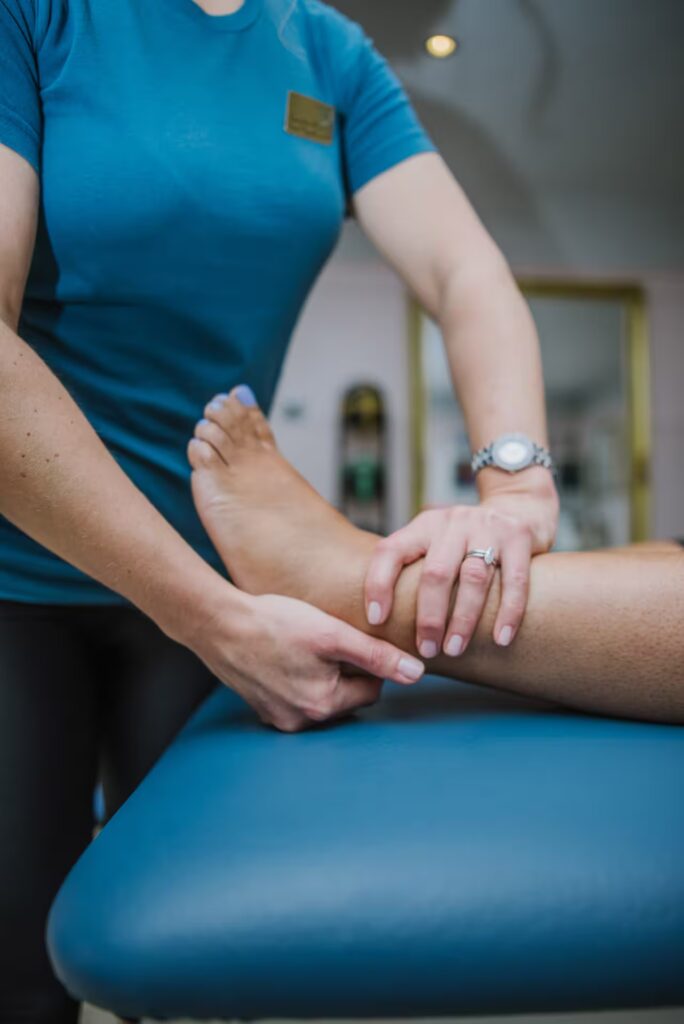
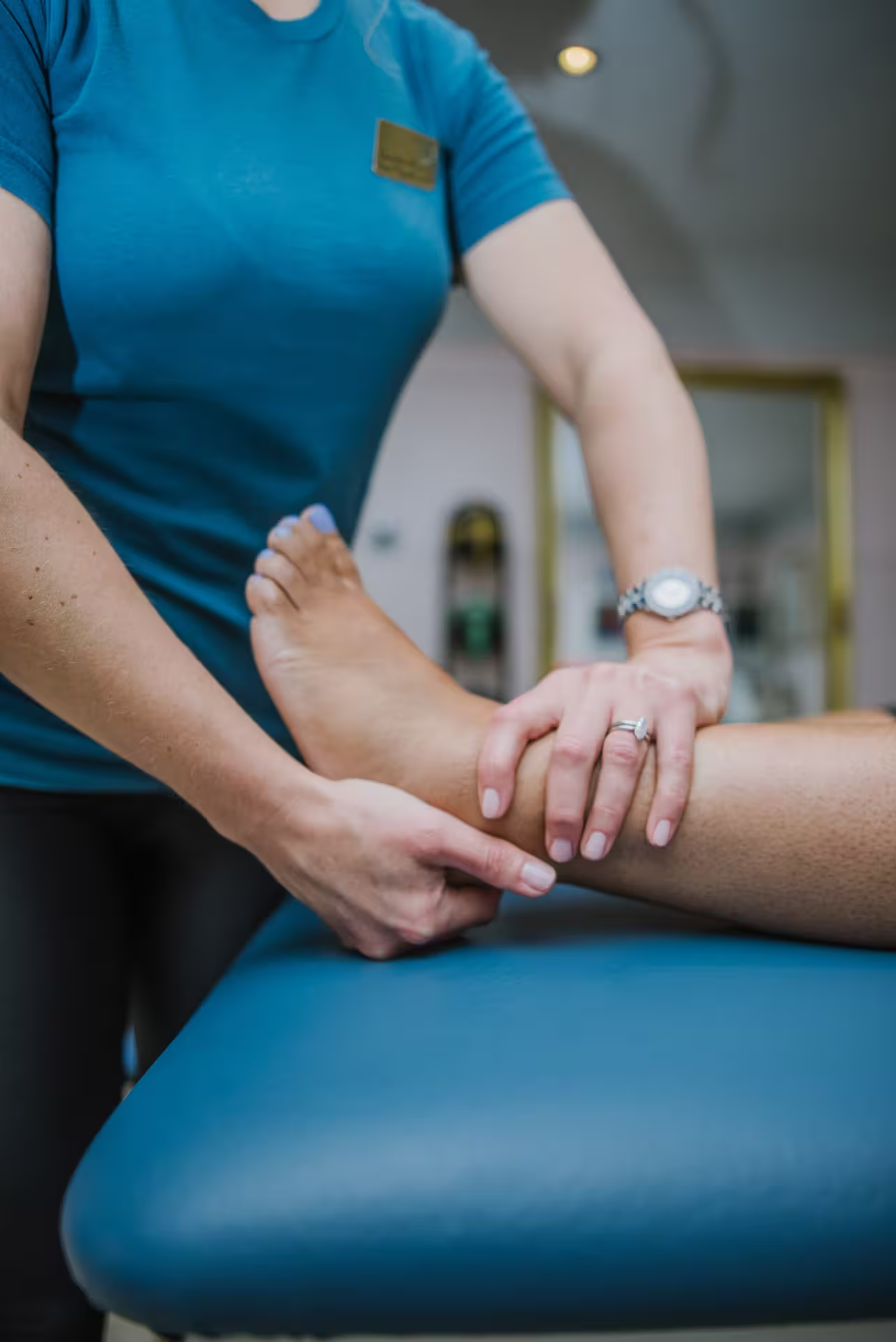
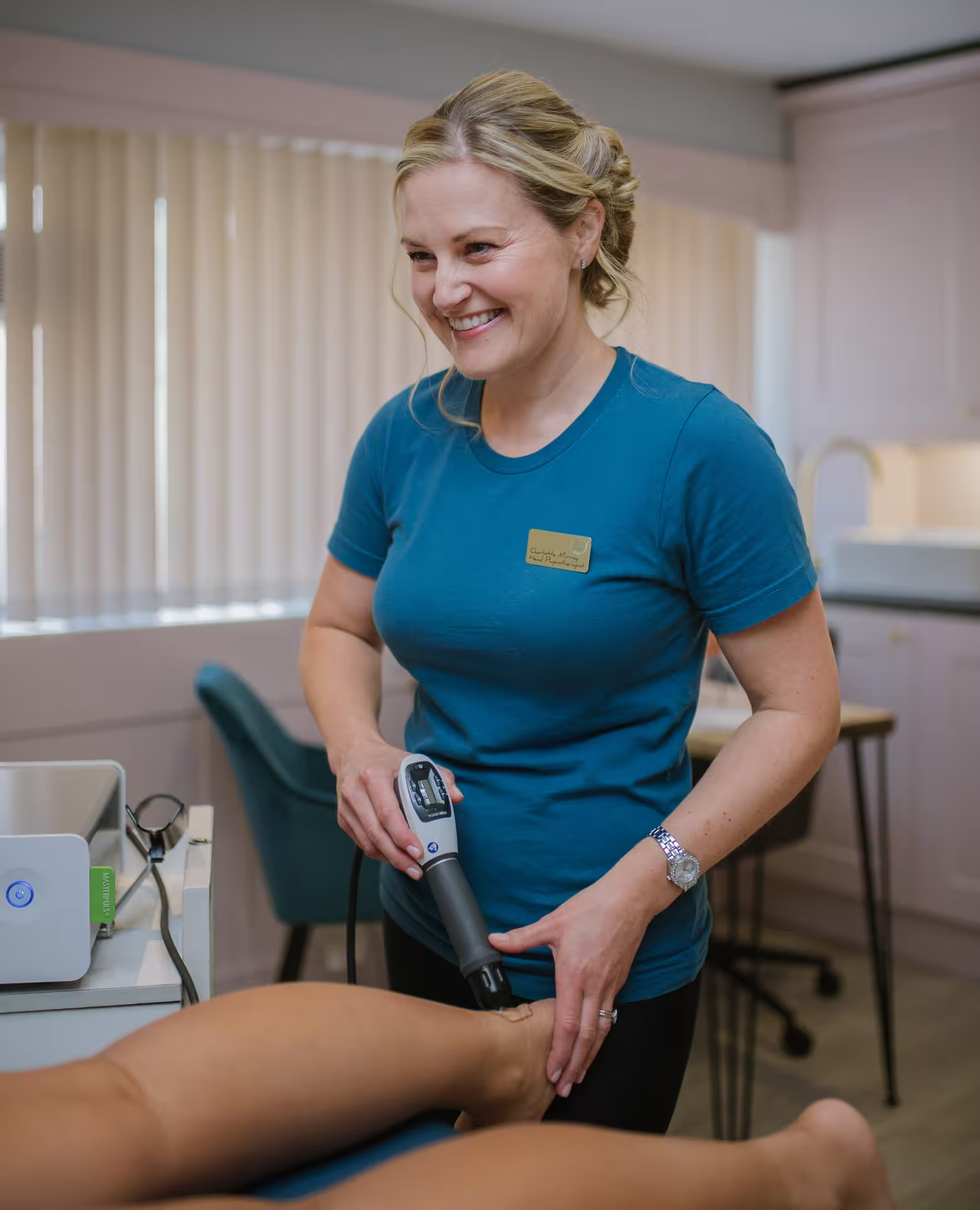
Your treatment might include hands-on therapy to ease stiffness or swelling, mobilisation techniques to improve joint movement, and a structured rehab plan to restore strength, control, and balance. We often use K-Laser therapy or shockwave for chronic conditions like plantar fasciitis or Achilles tendinopathy, which respond well to focused tissue healing.
Rehab may begin in the clinic, but many of our patients progress into small-group physio-led classes like Back to Activity, Strength, or StrongHER Together, depending on your needs and goals. We can also support you with 1:1 Reformer or Matwork Pilates, helping you regain confidence in how your feet and ankles move — so you can get back to walking, running, or just enjoying pain-free everyday life.
Benefits of Ankle & Foot Pain Treatment
Foot and ankle pain can make even simple tasks — like walking to the car or standing in the kitchen — feel like hard work. The right physiotherapy can help reduce pain, improve your mobility, and stop you from limping, avoiding movement, or constantly worrying about every step.
As we work together to improve joint flexibility, build strength in the supporting muscles, and retrain your movement patterns, you’ll notice everyday activities start to feel easier and more comfortable. Many of our patients tell us they’re back to walking further, standing longer, or getting through a gym class without flare-ups.
Longer term, our goal is to help you move well, stay active, and avoid the injury coming back — whether that means hiking in the hills, competing in sport, or just keeping up with your day-to-day life. With the right treatment and rehab, you can feel more confident, capable, and free from that nagging pain.
Faq's
Ankle & Foot Pain FAQs
How to relieve ankle and foot pain?
Start by reducing anything that aggravates your symptoms — that might mean cutting back on walking, impact exercise, or wearing unsupportive shoes. Ice, elevation, gentle mobility work, and switching to lower-load activity like cycling can all help in the short term. But if the pain is persistent or recurring, it’s best to get it properly assessed.
Will I need to stop walking, running, or exercising during treatment?
Not always — in fact, complete rest can sometimes make things worse. We’ll guide you on how to modify your activity safely and keep you moving within pain-free limits, while focusing on rehab exercises that get you back to full strength and function.
How long does ankle and foot pain last?
It depends on the cause. A mild sprain may settle within 2–3 weeks, while conditions like plantar fasciitis or Achilles tendinopathy can take a few months to fully resolve — especially without the right rehab. Early intervention usually leads to faster recovery.
What exercises help with ankle and foot pain?
Balance, calf and foot strengthening, and mobility work are often key. Exercises like heel raises, ankle circles, resistance band movements, and glute activation drills can be really helpful — but we’ll tailor them specifically to your condition and goals.
How does a physio help with ankle and foot pain?
We don’t just look at where it hurts — we assess how you move, what structures are involved, and what may have contributed to the problem in the first place. Treatment might include hands-on work, targeted rehab, advice on footwear or activity, and therapies like K-Laser or shockwave for chronic issues.
Why does my foot hurt first thing in the morning?
This is often a sign of plantar fasciopathy especially if the pain is sharp in the heel or arch with those first steps out of bed. The plantar fascia tightens overnight, so the sudden stretch when you stand up can trigger pain.
Can poor footwear cause foot and ankle pain?
Yes — shoes that lack support, have an unstable heel, or don’t fit properly can contribute to a range of issues, including tendon pain and plantar fasciitis. We’ll talk through your footwear choices as part of your assessment.
Is it normal for swelling to last after a sprain?
Some swelling can hang around for weeks, even months, even after the pain improves — especially if you’re still loading the ankle heavily. But if swelling is persistent or gets worse, it’s worth checking for deeper tissue damage or delayed healing.