Service
Shockwave Therapy
Shockwave therapy is one of the most effective tools we use in clinic for stubborn tendon or soft tissue problems that haven’t responded to rest or rehab alone. It works by sending acoustic waves deep into the tissue, stimulating blood flow and kick-starting your body’s natural healing processes. It’s particularly useful for things like plantar fasciitis, Achilles tendinopathy, tennis elbow, and calcific shoulder issues — often when nothing else has quite worked.
I like it because it’s fast, focused, and doesn’t involve injections or medication. Most people notice a real difference after just a few sessions. If you’ve been told to “just rest it” for months and nothing’s improving, this might be the thing that gets you moving again.
Who Typically Benefits From Shockwave Therapy?
Shockwave therapy is particularly beneficial for people with chronic or stubborn musculoskeletal problems that haven’t responded well to rest, rehab, or other conservative treatments. It’s most commonly used for tendon-related issues like Achilles tendinopathy, plantar fasciitis, patellar tendinopathy, and tennis or golfer’s elbow. It’s also a great option for calcific tendinopathy in the shoulder, where calcium deposits build up and limit movement or cause pain.
We often use shockwave with active people or athletes struggling with persistent pain that’s stopping them from training — especially when imaging shows a degenerative tendon, rather than an acute tear. It’s also helpful for people who are less active but have ongoing pain that flares every time they try to move more or get back into exercise. If you’ve been told to just “keep stretching” or “wait it out,” and nothing has changed in months, shockwave can be the missing piece to help get things healing and get you moving again.
What Does Shockwave Therapy Involve?
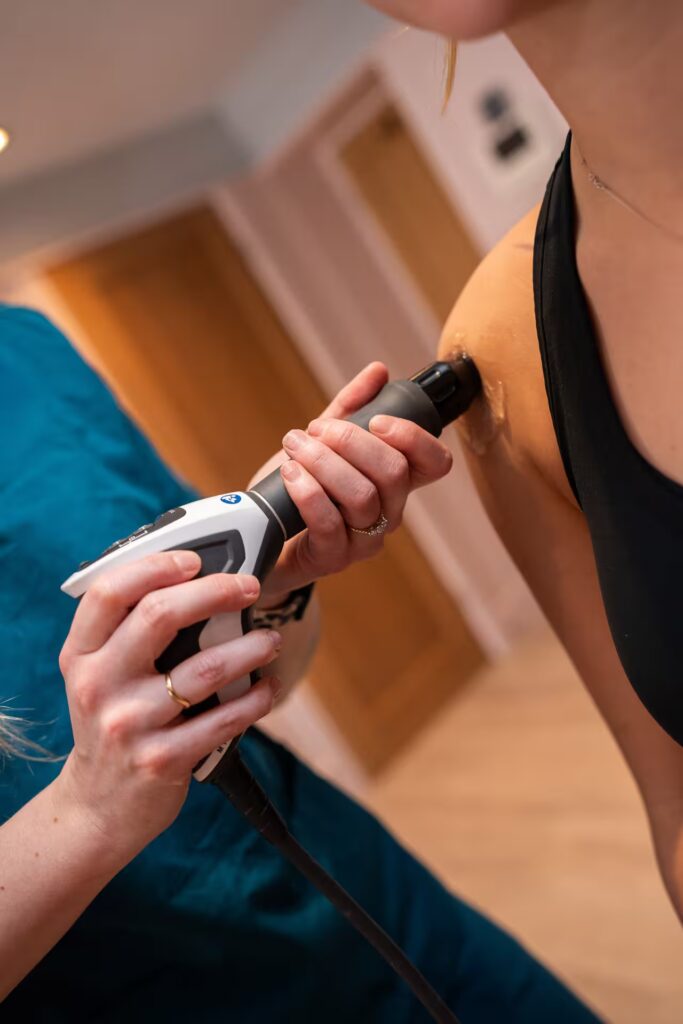
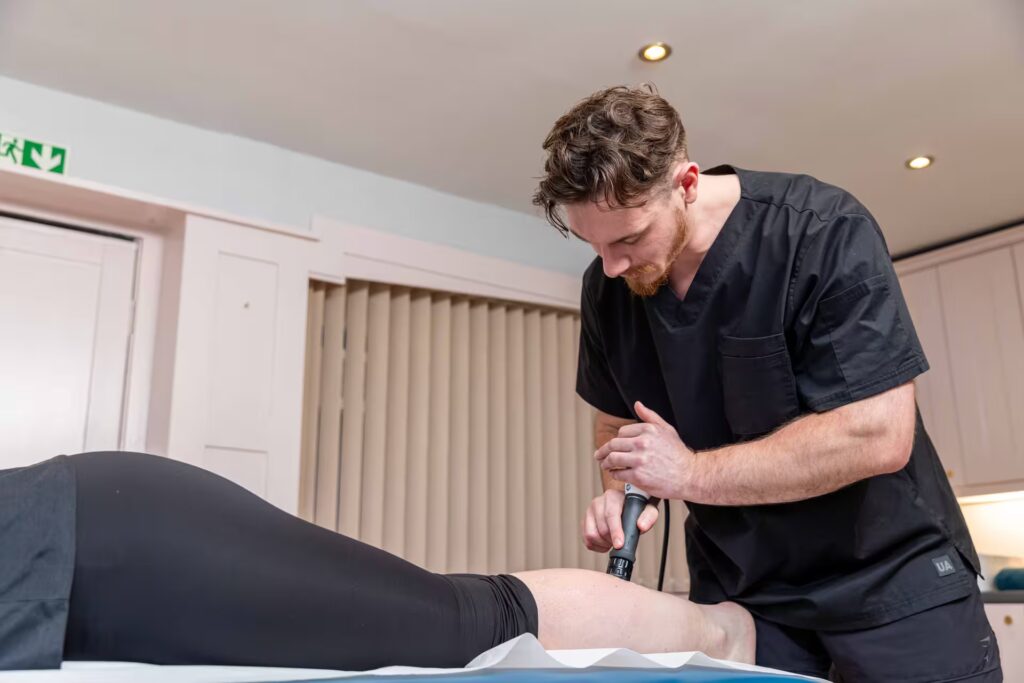
A shockwave therapy session is quick, non-invasive, and usually takes around 15–20 minutes. We use a handheld device that delivers high-energy sound waves directly to the area of pain or injury. These sound waves stimulate blood flow, kickstart the body’s natural healing response, and help break down scar tissue or calcification in stubborn tendons.
During the session, you might feel a tapping or pulsing sensation — it can be uncomfortable at times, but we always check in to make sure the intensity is manageable. Most patients tolerate it really well. There’s no downtime, and you can usually carry on with your day afterwards, though we may advise you to avoid heavy activity for 24–48 hours to let the tissue respond.
We typically recommend a course of 3–6 weekly sessions, depending on the condition and how you respond. Shockwave works best when combined with rehab exercises — we’ll guide you on exactly what to do to get the best results.
Benefits and Outcomes of Shockwave Therapy Treatment
Shockwave therapy is recommended by NICE (the National Institute for Health and Care Excellence) for several stubborn musculoskeletal conditions — and for good reason. The treatment works by stimulating the body’s natural healing response, which in turn reduces pain, improves tissue regeneration, and promotes quicker recovery.
It’s particularly effective for people who have tried rest, rehab, or even injections without success. The main benefits include pain relief, faster healing, improved mobility, and a quicker return to everyday activity or sport. Many of our patients notice a change within 1–3 sessions, although a full course of 3–6 treatments is usually recommended for long-term results.
It’s a safe and non-invasive option with no downtime, meaning you can get on with your day straight after the appointment. And because we combine shockwave with targeted rehab, you get the best of both worlds — symptom relief and lasting results.
Faq's
Shockwave Therapy FAQs
Is shockwave therapy painful?
You might feel some discomfort during treatment, especially over very sore areas, but most people tolerate it well. We can adjust the intensity based on your pain tolerance, and the sensation only lasts while the treatment is being delivered.
How many sessions will I need?
Most people benefit from a course of 3 to 6 sessions, spaced about a week apart. The number of treatments depends on how long the issue has been present and how your body responds.
How long does each shockwave therapy session take?
The treatment itself lasts around 10–15 minutes, but sessions may be slightly longer if we’re combining it with rehab or re-assessment.
Are there any side effects for shockwave therapy?
Some people experience mild soreness, redness, or bruising in the area afterwards, but this usually settles within 24–48 hours. It’s a non-invasive treatment with minimal risk.
How soon will I see results from shockwave therapy?
Some people feel improvement after 1 or 2 sessions, but more often results build gradually over the course of treatment. The biggest changes are typically noticed between weeks 3–6.
Is shockwave therapy safe?
Yes — it’s NICE-approved, widely researched, and safe when carried out by a qualified practitioner. We’ll always screen for any contraindications before starting.
What conditions is it most commonly used for?
We use it most often for plantar fasciitis, Achilles tendinopathy, patellar (jumper’s knee) tendinopathy, gluteal tendinopathy, and shoulder calcific tendinopathy or rotator cuff issues. It’s ideal for stubborn, long-standing tendon problems.
Can I exercise after treatment?
Yes — although we advise avoiding high-impact or strenuous activity for 48 hours after each session to allow the healing process to begin. We’ll guide you on what’s safe.
Is shockwave therapy covered by insurance?
It depends on your provider. Some insurance policies cover it, especially when prescribed as part of a physiotherapy plan. We’re happy to help you check this in advance.
Can I take anti-inflammatories (NSAIDs) while having shockwave therapy?
We advise against taking NSAIDs like ibuprofen during your course of shockwave therapy. The treatment works by stimulating a controlled inflammatory response in the tissue — it’s part of how the body heals. Taking anti-inflammatories can counteract this process and reduce the effectiveness of the treatment. If you’re in discomfort, we recommend paracetamol instead if you are able to take it.