Acupuncture Halifax

Service

Acupuncture

Used alongside physiotherapy, when appropriate, to support pain relief and healing.

Acupuncture is a treatment we sometimes use as part of your physiotherapy care to help reduce pain, release tension, and support the body’s natural healing processes. It can be a helpful addition for patients with persistent pain, muscle tightness, or nerve irritation that isn’t fully resolving through hands-on therapy or exercise alone.

At Back to Fitness Physio, acupuncture is offered only by Charlotte Murray, our head physio. She is a member of the AACP (Acupuncture Association of Chartered Physiotherapists) and has completed additional training to deliver acupuncture in a safe, evidence-based and clinical way.

It’s important to note that Charlotte is not a traditional acupuncturist, and acupuncture is never a standalone service here. It’s something she may choose to incorporate alongside other physiotherapy treatments, but only if she feels it’s the right fit for you based on a full assessment. If you’re interested in this approach, we recommend booking a physiotherapy appointment with Charlotte to explore whether acupuncture could be a helpful part of your care.

Copy of DSC 6311 2 converted
Accupuncture converted 1
Who Typically Benefits From Acupuncture?
We often recommend acupuncture for people with persistent muscle pain, tension headaches, migraines, sciatica, joint pain, or chronic conditions like fibromyalgia. It can also help reduce stress and promote better sleep — so if pain is affecting your nervous system or quality of life, it may be worth trying.
Acupuncture can be particularly effective when used alongside other physio treatments, especially if progress has plateaued. It helps relax overactive muscles, ease stiffness, and take the edge off stubborn pain so that people can tolerate more rehab. We often use it with runners, busy professionals, menopausal women, and people living with chronic tension or inflammatory conditions.
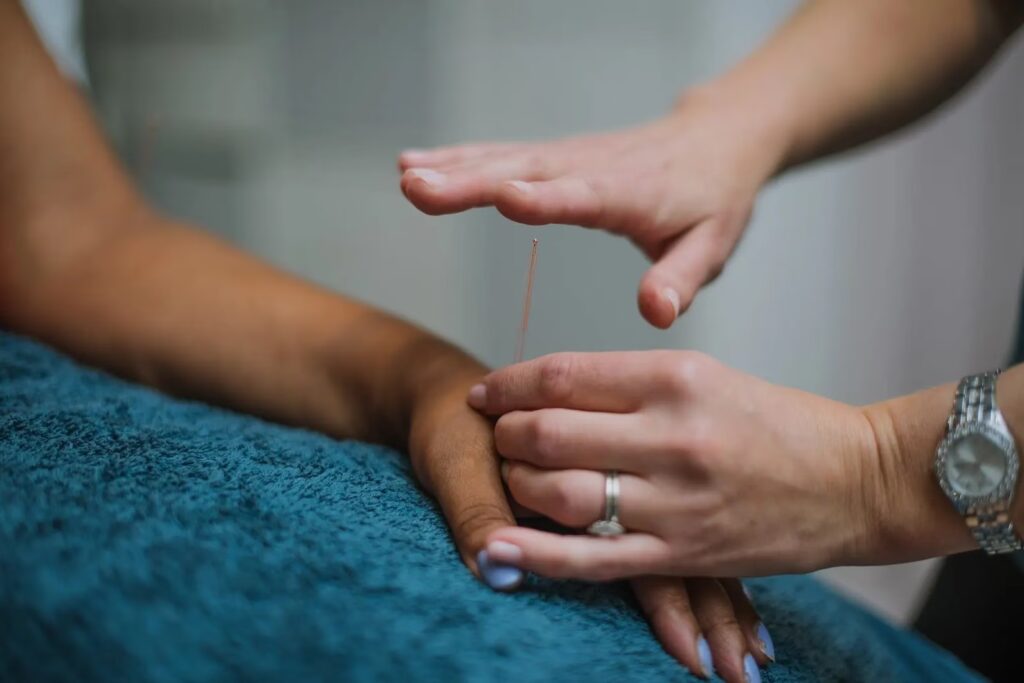
Your first acupuncture session will usually start within a standard physio appointment. We’ll assess your symptoms, explain how acupuncture might help, and get your consent before starting. Fine, sterile needles are inserted into specific points on the body — often around tight muscles, nerve roots, or pain-sensitive areas. Most people feel a light sensation, but it’s not usually painful.
Sessions are calm and relaxing, and we typically leave the needles in place for 15–20 minutes while you lie still. Some people feel a mild ache, warmth, or heaviness around the area — that’s totally normal. Depending on your condition, we might use acupuncture at the start or end of your treatment plan or combine it with hands-on therapy, rehab, or shockwave.
Acupuncture helps reduce pain, relax tight muscles, calm the nervous system, and promote blood flow to aid healing. Some people feel a benefit straight away, while for others it takes a few sessions to notice a difference. We find it works well for both acute flare-ups and long-term conditions that have become stuck or hypersensitive.
It can reduce reliance on painkillers and improve sleep, energy levels, and overall wellbeing — especially if your body has been in a constant cycle of stress and pain. Acupuncture is rarely a standalone fix, but it can be a really valuable tool when used as part of a wider treatment plan.
Faq's

Acupuncture FAQs

Does acupuncture hurt?
Most people say they barely feel the needles going in — they’re very fine and designed for minimal discomfort. You might feel a dull ache or heaviness, but it’s rarely painful.
Yes — acupuncture is known to have a calming effect on the nervous system, which can help with stress, anxiety, and sleep. It’s not a replacement for psychological support, but it can be part of a holistic approach.
Not directly. While acupuncture may help reduce stress-related eating or improve sleep (which affects weight), it’s not a weight-loss treatment on its own. We focus on using it for pain, tension, and nervous system regulation.
Some people feel immediate relief; others need 4-6 sessions to notice a change. It depends on the condition, how long you’ve had it, and how your body responds.
We use it for back pain, neck pain, sciatica, headaches, migraines, joint pain, tendon issues, and muscle tightness. It’s especially helpful when used alongside exercise and other physio treatments.
You can take simple painkillers like paracetamol, but we recommend avoiding NSAIDs like ibuprofen around the time of treatment. Acupuncture relies on the body’s natural inflammatory healing response, and anti-inflammatories may blunt its effect.
Team

The People Behind Your Care