Classes
Reformer and Matwork Pilates
Discover the power of Pilates at Back to Fitness Physio — where movement meets rehab in a supportive, physio-led environment. We offer both Reformer Pilates and Matwork Pilates in small group classes or tailored 1:1 sessions, helping you build strength, improve flexibility, and move with confidence. Whether you’re recovering from injury, managing a long-term condition, or simply want to feel stronger in your body, our expert instructors and physiotherapists will guide you safely at your own pace. Suitable for beginners through to advanced — everyone starts with a solid foundation, and from there, we grow together.

Who Typically Benefits From Pilates?
Pilates is for anyone who wants to move better, feel stronger, and build a more resilient body — regardless of age, fitness level, or injury history. It’s especially beneficial for people recovering from injury, managing long-term conditions like back pain or arthritis, or those looking to improve core strength, posture, and flexibility.
At Back to Fitness Physio, we often recommend Reformer or Matwork Pilates as part of a rehab journey — particularly for issues like lower back pain, shoulder or hip problems, and postural imbalances. It’s also ideal for those in perimenopause or menopause, where strength, balance, and joint health become increasingly important.
Pilates can help prevent injury, support recovery, and improve body awareness — whether you’re returning to exercise, managing a health condition, or simply want to move more confidently in daily life. With small class sizes and physio-led guidance, our sessions are safe, supportive and tailored to your needs.
What Does Pilates Involve?
Pilates focuses on controlled, precise movements that strengthen your core, improve posture, and enhance flexibility. At Back to Fitness Physio, we offer both Matwork and Reformer Pilates, delivered in small, supportive classes or personalised 1:1 sessions.
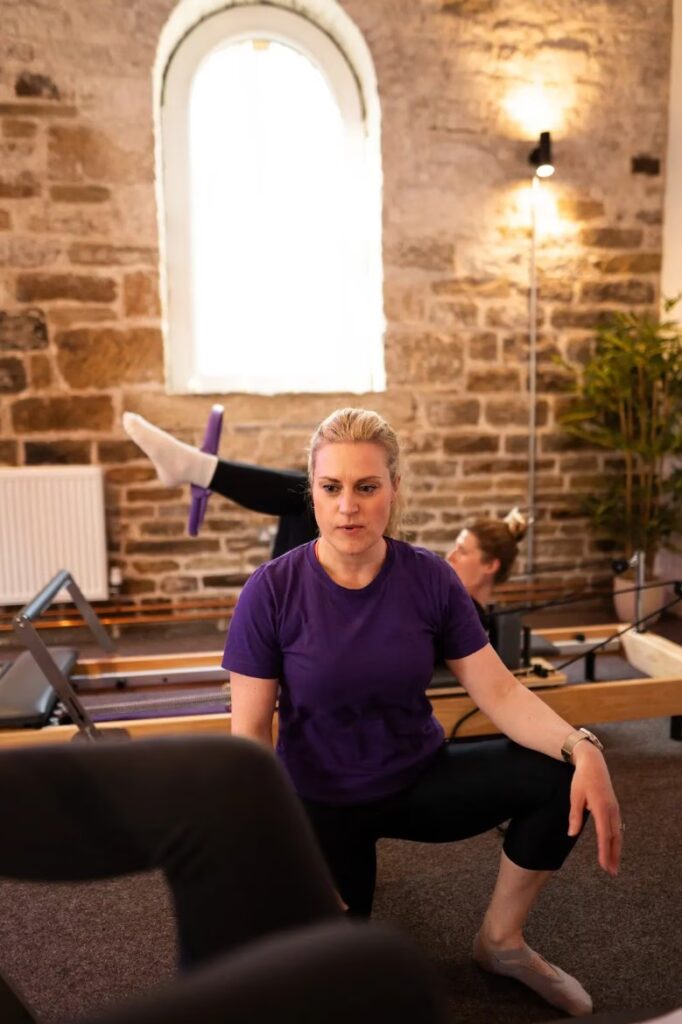
Matwork Pilates is performed on a mat using your body weight, with optional equipment like bands, soft balls, and magic circles to add variety and challenge. Reformer Pilates uses a specialist machine with springs and pulleys to add resistance, which can be adjusted to suit any level — from complete beginners to advanced rehab.
In a typical class or 1:1 session, you’ll be guided through a series of low-impact exercises that target strength, control, alignment and breathing. Your instructor or physio will ensure you’re moving safely, adapting exercises to suit your body and goals.
Pilates is calm but challenging, and many people find it both mentally and physically rewarding. Whether you’re recovering from injury or simply want to feel stronger and more in control of your movement, Pilates is a brilliant tool for lifelong health and resilience.
Our Range of Pilates Services
At Back to Fitness Physio, we offer a full range of Pilates services to support recovery, build strength, and promote long-term movement health. Whether you’re new to Pilates or returning after injury, our expert team will help yo u move with confidence.
- Reformer Pilates: These dynamic sessions use specialist Reformer machines with adjustable spring resistance to challenge strength, control, and alignment. Ideal for injury rehab, core training and progressive strength-building. Available as small-group classes or 1:1 sessions.
- Matwork Pilates: A floor-based class using bodyweight and small equipment like bands, balls, and circles. Perfect for improving posture, flexibility and deep core activation. Offered in supportive, physio-led small groups or 1:1.
- 1:1 Pilates Sessions: Delivered by highly experienced physiotherapists who are trained through the Australian Physiotherapy and Pilates Institute (APPI). These personalised sessions are ideal for injury recovery, focused rehab, or confidence-building before progressing to classes.
All our classes are taught by physiotherapists or specialist instructors with in-depth knowledge of movement and injury. With small class sizes and expert guidance, you’ll always feel supported — and challenged at just the right level.
Faq's
Pilates FAQs
Is Pilates good for weight loss?
While Pilates isn’t a high-calorie-burning workout on its own, it can support weight loss by increasing muscle mass, which in turn helps raise your basal metabolic rate (BMR) — meaning your body burns more energy at rest. Pilates also helps tone and lengthen muscles, which can lead to losing inches and improving body shape, even if the scales don’t change dramatically. Combined with other forms of exercise and healthy habits, it’s a powerful tool for long-term weight management.
What’s the difference between yoga and Pilates?
Both yoga and Pilates focus on controlled movement, breathing, and body awareness — but they have different aims. Pilates is more focused on building core strength, stability, and muscular control, often used in rehab or injury prevention. Yoga tends to emphasise flexibility, balance, and mindfulness, with a greater focus on relaxation and flow between poses. Both complement each other beautifully, and many people choose to do both.
What to wear to Pilates?
Wear comfortable, stretchy clothing that allows you to move freely — like leggings, a vest or fitted top, and socks with grip if you have them. Avoid anything too loose or baggy, as your instructor will need to see your alignment and posture. For Reformer Pilates, trainers aren’t needed, but grippy socks or bare feet are ideal.
What training do Pilates instructors have?
At Back to Fitness Physio, our 1:1 Pilates sessions are delivered by highly qualified physiotherapists who have completed specialist training with the Australian Physiotherapy and Pilates Institute (APPI). Our group classes are taught by a mix of physiotherapists and experienced instructors, all with in-depth knowledge of anatomy, movement, and injury rehab — so you’re always in safe hands.
Does Pilates burn calories and fat?
Yes — Pilates burns calories, and while traditional Pilates is lower intensity, it helps build lean muscle, which boosts your basal metabolic rate (BMR) and supports long-term fat loss. If you’re looking for a more cardio-based workout, our Cardio Reformer classes on Thursday evenings and Saturday mornings combine strength with higher-intensity intervals to increase your heart rate and burn more calories — perfect for those wanting to tone up and slim down while building strength and control.
Is Pilates strength training?
Yes — Pilates is a form of strength training, particularly for your deep core muscles, glutes, back, and shoulders. It uses bodyweight or resistance (like springs on the Reformer or small equipment in Matwork) to build muscular strength, endurance, and control. While it’s lower impact than traditional weightlifting, it’s highly effective for improving strength, especially when done consistently.
Does Pilates build muscle?
Yes — Pilates helps build lean, functional muscle, particularly in the core, glutes, legs, and upper body. It focuses on controlled, precise movements that challenge muscles through resistance (like springs on the Reformer or small props in Matwork), improving strength and tone over time. While it may not build bulk, it’s excellent for increasing muscular endurance, definition, and stability.
What is the difference between matwork and reformer Pilates?
Matwork Pilates is performed on a mat using your bodyweight and small props like bands, balls, and circles to build strength, control, and flexibility. Reformer Pilates uses a specialist machine with springs and pulleys to add resistance, offering greater variety and support — especially useful for rehab or progressing strength. Both are effective, but the Reformer allows for more dynamic, full-body movements and can be tailored more precisely to individual needs.
Do I need to be flexible to do Pilates?
Not at all. Pilates helps improve your flexibility over time, but you don’t need to be flexible to start — everything can be adapted to your current level.
Is Pilates suitable if I have back pain or an injury?
Yes — Pilates is widely used in injury rehab, especially for back, hip, shoulder and core issues. At Back to Fitness Physio, sessions are tailored by physios or trained instructors to make sure you move safely and with support.
Can I do Pilates if I’m pregnant or recently had a baby?
With the right guidance, Pilates can be safe and beneficial both during and after pregnancy. Always speak to your physio or instructor first so we can adjust exercises appropriately for each stage.
Is Pilates suitable for older adults?
Absolutely. Pilates helps maintain balance, mobility and strength — all of which are important for healthy ageing. Our instructors will adapt exercises to suit all abilities.
How often should I do Pilates to see results?
Most people feel a difference in 4–6 sessions and see real progress with 1–2 classes per week. Consistency is key, even if you’re starting slowly.
What’s the difference between physio-led Pilates and regular Pilates?
Physio-led Pilates is taught by qualified physiotherapists with in-depth knowledge of injury, pain and movement. It’s ideal if you’re recovering from injury, managing a condition, or want a more tailored approach.
Can men do Pilates?
Absolutely — Pilates is great for men! It improves core strength, flexibility, and control, and is particularly beneficial for sports performance and injury prevention.
Is Pilates safe for beginners?
Yes. Our classes are suitable for all levels and we ensure beginners feel welcome, supported and guided every step of the way.
What equipment do I need to bring to a Pilates class?
Just wear comfy clothes and bring a water bottle. We provide all mats and equipment — including Reformer machines and small props.
Do I need to do a foundation or intro session first?
Yes — everyone new to Reformer Pilates must attend a foundation session first. This ensures you’re confident using the equipment and moving safely before joining a class.
Can Pilates help with posture and alignment?
Yes — Pilates is one of the best ways to improve posture, especially if you sit a lot, have a desk job, or are recovering from injury.
Will I be sore after a Pilates class?
You may feel mild soreness, especially if you’re using muscles in a new way — but it should feel like a good, “worked” soreness, not pain. Sessions are always scaled to your level.
Is Pilates covered by health insurance?
If your 1:1 sessions are delivered by a physiotherapist as part of rehab, they may be covered by your insurance provider. Please check with your insurer and bring your authorisation code if required.
What should I expect in my first Reformer class?
You’ll be guided through a series of controlled movements on the Reformer machine, with adjustable resistance to match your ability. It’s low impact but very effective — and we’ll make sure you feel supported throughout.
Can I combine Pilates with other forms of exercise or rehab?
Yes — in fact, we encourage it. Pilates works brilliantly alongside strength training, cardio, or sport, helping you move better and reduce your risk of injury.
Do you offer Pilates for menopause or women’s health?
Yes — we offer classes like StrongHER Together that support women in perimenopause and beyond, with a focus on strength, balance and joint health. Pilates is a great option for this stage of life.
How is Pilates different from physiotherapy?
Physiotherapy focuses on diagnosing and treating pain or injury. Pilates is often used alongside physio to improve strength, movement and recovery — especially at the rehab and prevention stage.
What’s the best class for me if I’m new to exercise or returning after injury?
We recommend starting with a 1:1 session or a foundation Reformer session, so we can assess your movement and guide you into the right class for your ability and goals — whether that’s Matwork, Reformer, or rehab-based options like Back to Activity.